THE U.S.A MADE GERBER KNIVES & GEAR.
By Henk Kraaijvanger.
PART I: THE HISTORY OF GERBER LEGENDARY BLADES.
THE BEGINNINGS OF GERBER LEGENDARY BLADES AND A JOURNEY THROUGH TIME.
The renowned American brand Gerber Legendary Blades was founded in 1939 by advertising man Joseph (Joe) R. Gerber as the supplier and originator of several carving-knife sets. Local knifemaker David Murphy made the knives by hand, and Joe Gerber, who owned a large advertising agency, gave them to his clients as business gifts. These and later knives had blades ground from discarded saw blades, with smooth cast-on aluminium handles.
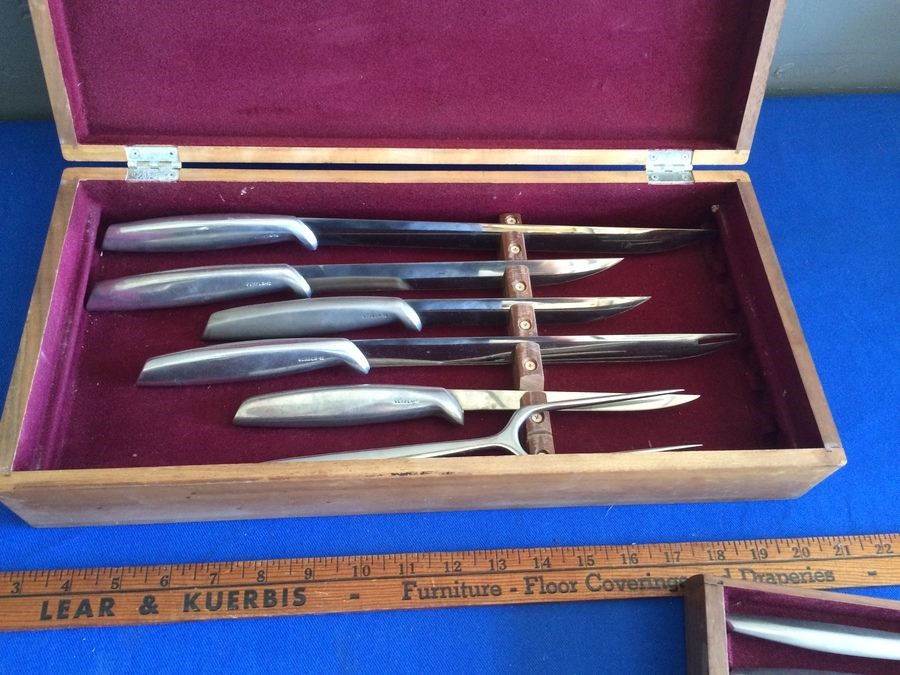
THE GERBER LEGENDARY BLADES CARVING SETS.
THE SECOND WORLD WAR HITS GERBER.
Immediately after the cowardly Japanese attack on Pearl Harbor on 7 December 1941, as America entered WWII, David Murphy began making his fine combat knives for GIs heading to the battlefields, under the well-known Time Life magazine motto “Save a Life with a Knife”. During his working life, David made more than 90.000 of these combat knives. Recycling was already popular back then.
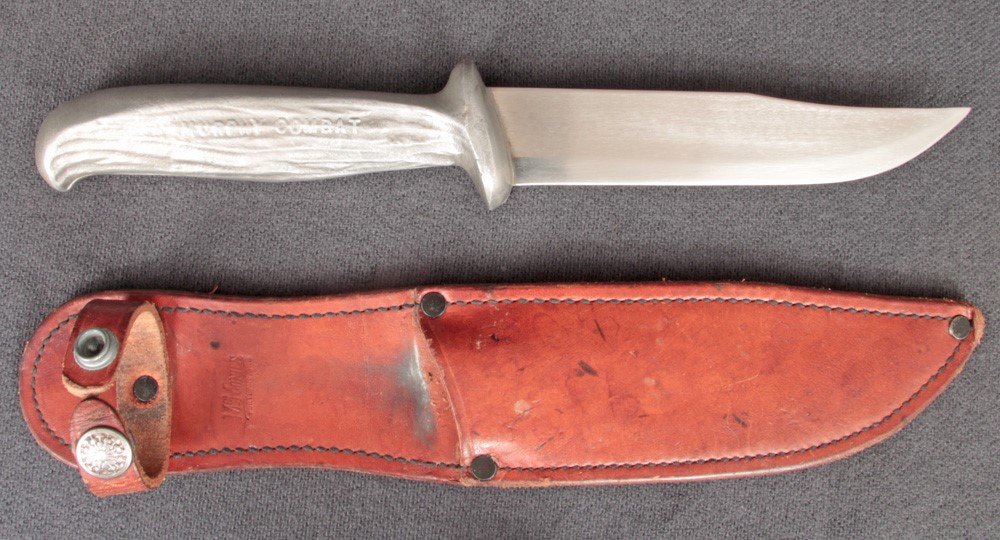
THE DAVID MURPHY WWII COMBAT KNIFE.
The son of Joe, the later President of Gerber Legendary Blades Pete Gerber volunteered to serve the Land and Uncle Sam and the Gerber knife production was therefore forced to stop for several years.
AFTER THE SECOND WORLD WAR.
Joe’s son Pete Gerber was now the driving force behind Gerber Legendary Blades. After the 2nd World War, he had to resume knife production himself because David Murphy never returned to Gerber following various disagreements. Rumour had it that a considerable number of dollars & dimes were also involved. Sadly, their relationship never recovered.
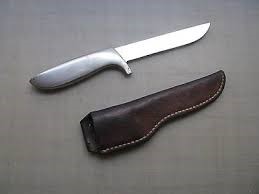
THE GERBER SHORTY.
THE FIFTIES AND SIXTIES: Gerber Legendary Blades again produced fine, high-quality hunting knives with cast-on aluminium handles and highly wear-resistant M2 tool-steel blades. They sold very well, and Gerber gathered momentum. Its first folding hunting knife designed for hunters, the Gerber Folding Hunter, would soon be a major hit too.
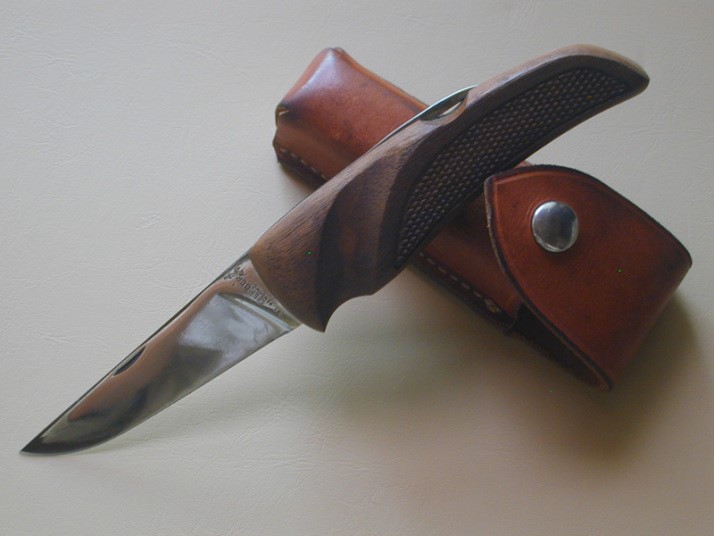
THE GERBER FOLDING HUNTER.
In addition to these hunting models, they also produced military models such as the Combat (Survival) Mark II dagger at Gerber Legendary Blades.
THE SIXTIES AND SEVENTIES: New knives for hunters and sportsmen included the attractive Armorhide Steel and Presentation hunting knives, the Folding Hunter, Magnum Folding Hunter, PK series and Sportsman folding knives.
HOW I CAUGHT THE GERBER BUG.
Around 1975/1976, after reading an American article about Los Angeles SWAT, I caught the Gerber bug. I hope they never find a cure! The militarily trained LA SWAT operators carried the fine Gerber Combat (Survival) Mark II dagger, which also became famous and feared during the Vietnam War. Retired US Army captain Bud Holzman designed it in 1967, inspired by the ancient Roman gladius, which in my view was itself inspired by the xiphos of ancient Greek hoplites. Various versions of this Gerber Combat & Survival MK-II dagger would be produced over the years. Through West Germany and German importer and hunting firm “Sport und Jagd”, I obtained a Mark II with a grey Armorhide handle. Was I proud of that knife!
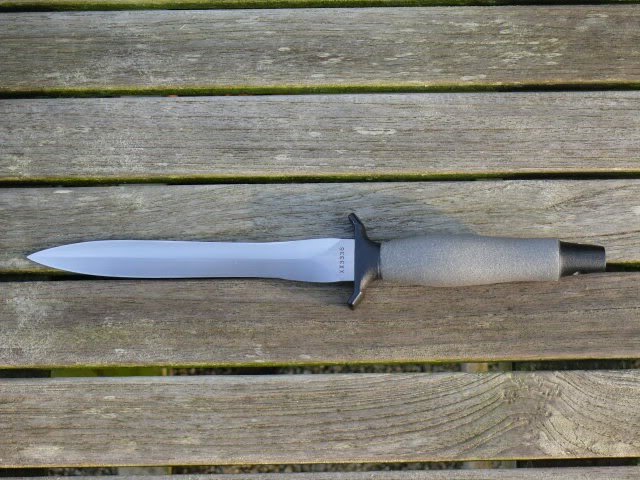
THE GERBER COMBAT MARK II.
Later on at my NATO placement (from 1976 - until 1984 in West Germany) at the time of the Cold War (which really wasn't and isn't over) came through the US. PX Stores various Gerber knives such as: the PK-1; the Sportsman III and the very nice Magnum Folding Hunter.
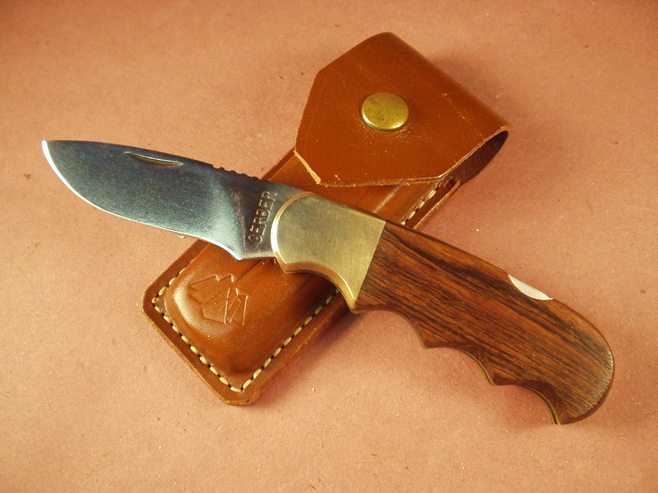
THE GERBER MAGNUM FOLDING HUNTER.
THE GERBER CUSTOM MODELS: One Christmas, my girlfriend gave me a fine Gerber Custom C375 hunting knife with a hardwood handle. How nice was that? I still have the knife; that girlfriend left long ago because of my wild ways and antics. These knives were made for only two years (1976-1978).
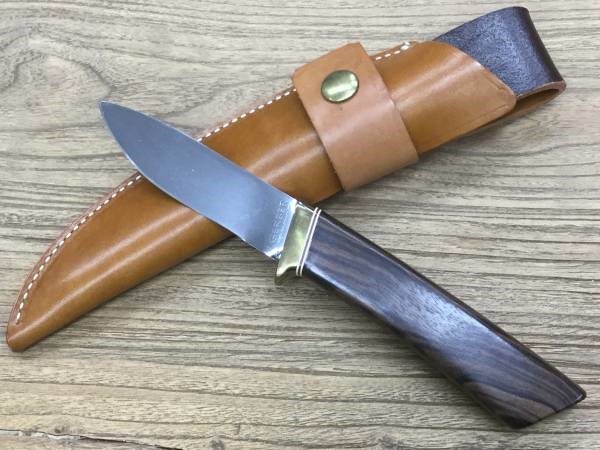
THE GERBER CUSTOM MODEL C 375.
THE EIGHTIES: Several American knifemakers & designers, including master knifemaker R.W. Loveless, designed specific models for Gerber. My favourites were the Gerber Loveless-designed Camouflage Guardian daggers, made in three sizes and various versions and sets.
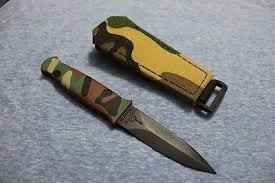
GERBER LOVELESS CAMOUFLAGE GUARDIAN BOOTKNIFE.
THE SURVIVAL CRAZE: During the survival-knife boom of the 80s, following the first Rambo film, many hollow-handled survival knives entered that lucrative market, their handles doubling as storage for survival items. Gerber also introduced fine survival knives, including the robust Basic Multi Function (B.M.F.) and elegant Light Multi Function (L.M.F.). Unlike their competitors, they had no hollow handles, instead using broad, sturdy full tangs. Negative reports about hollow handles soon emerged: on some cheaper brands, handle nuts worked loose during chopping and/or the short tang broke. Gerber’s broad full tang avoided those problems. Essential small survival items, otherwise stored in a hollow handle, went into a sewn-on Cordura nylon pouch on the Cordura nylon sheath. Both models were available with or without aggressive saw teeth.
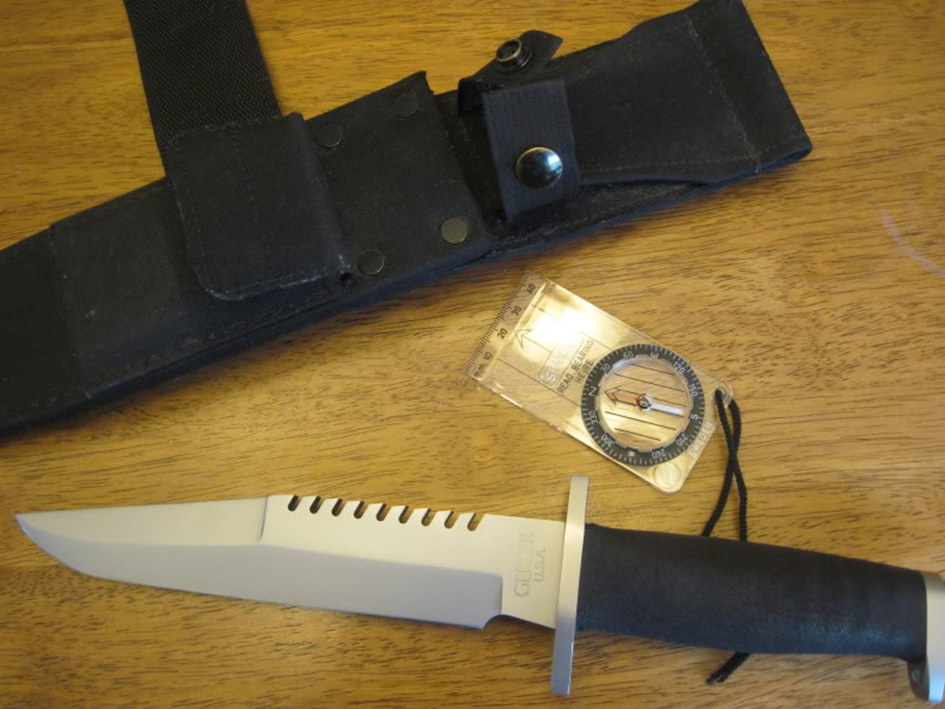
THE GERBER B.M.F. (with sawback).
GERBER ACQUIRES BENCHMARK U.S.A.
In 1984, Gerber acquired Benchmark Knives U.S.A., a direct competitor in higher-quality hunting knives. Some Benchmark models would continue to be produced under the Gerber brand.
PART II: A NEW GERBER ERA BEGINS.
In 1986, Gerber Legendary Blades was acquired by Fiskars Manufacturing Corporation of Wausau, U.S.A., a subsidiary of the large Finnish Fiskars OY group. The takeover ended production of those highly regarded old Gerber Legendary Blades models, which suddenly rose in value for collectors. Every disadvantage has an advantage. A different wind would now blow through Gerber Gear, and the rest is history, with promising developments ahead.
THE NINETIES AFTER THE FISKARS TAKEOVER. More lightweight and affordable Gerber knives & gear followed, including the Gator Fixed Blade and Folder. The Gator had a glass-fibre-reinforced plastic handle with a highly slip-resistant rubber covering. It was available in fixed-blade and folding versions. Their comfortable, secure handles made these Gators very popular.
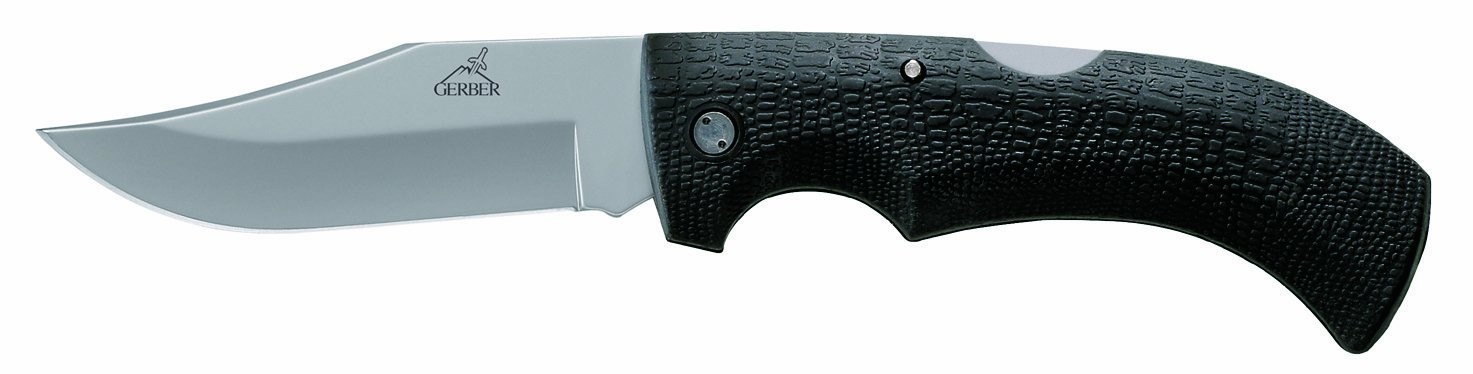
THE GERBER GATOR FOLDING KNIFE.
THE FIRST MULTITOOL: Around 1991, Gerber released its first truly one-handed multitool. This first model was highly polished and very flashy. Its sliding plier head allowed quick one-handed opening and closing. Unfortunately, that shiny polish came with a hefty price, so later models replaced it with an equally attractive satin finish.
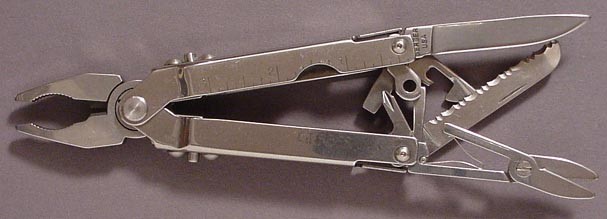
THE GERBER MULTITOOL / MULTI-PLIER, 1st MODEL.
Of course there would later also be black Multi-Pliers with more possibilities and really lockable tool components.
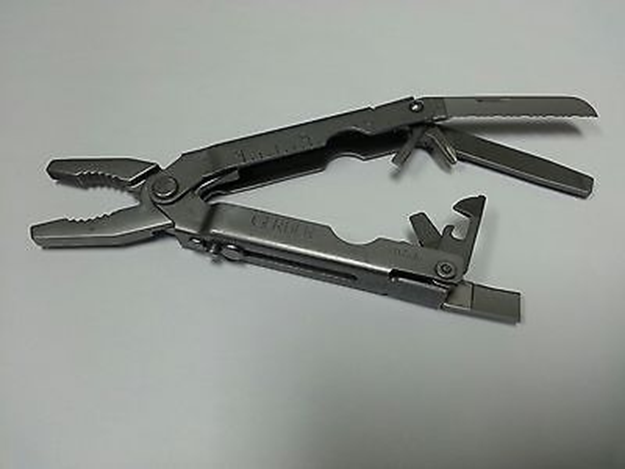
THE GERBER BLUNDNOSE MULTI-PLIER.
Alongside the one-handed sliding Multi-Pliers, a black butterfly-opening version appeared. It resembled the original Leatherman PST, but had much more comfortable and stronger handles. This Gerber Military Provision Tool (MPT) was promptly adopted by the US Army/Marines.
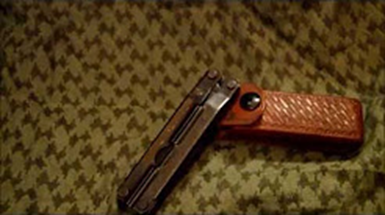
THE GENUINE GERBER US ARMY MULTITOOL.
THE MP 600 DET:
In the nineties (1997), Gerber worked with the US Army to release the functional, one-handed MP 600 DET in black for American EOD personnel. This official EOD model initially included a drop-point blade, later replaced by a Wharncliffe blade; see the photograph below for its tools. I tested the first model thoroughly and found it good. I have handled and critically examined the second EOD model but have not yet tested it in demanding practical use. Note: Gerber also offers the fine MP600 ST, or Sight Tool, for military personnel and sport shooters.
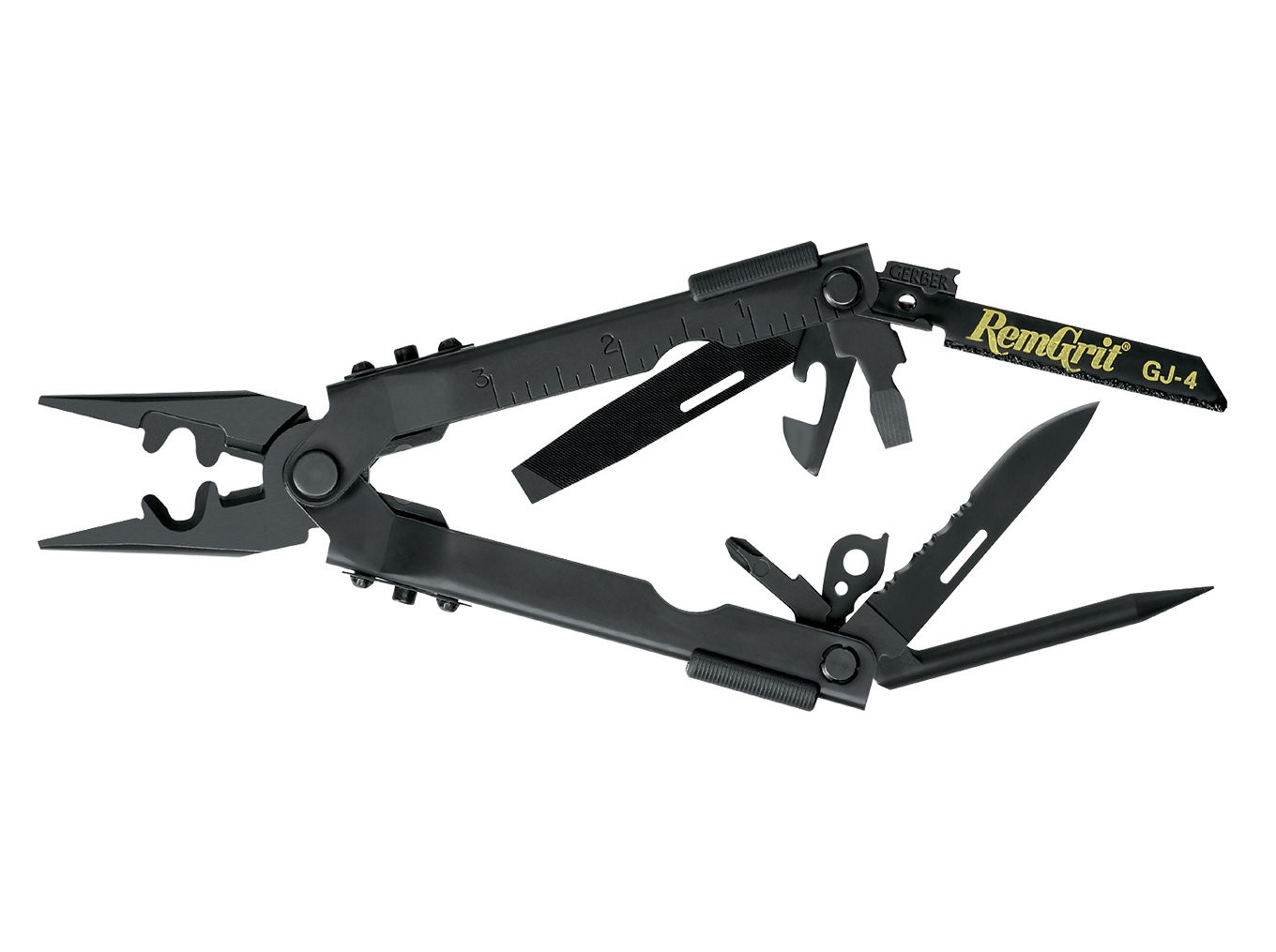
THE GERBER MP 600 DET (1st model).
GERBER GEAR IN 2017.
After the Bear Grylls survival craze a few years earlier, I saw the number of models and interest in Gerber decline somewhat. Gerber is now emphasising more USA-made knives with premium blade steels S30 V and 154 CM, or tough 420 HC. I tested several Bear Grylls models; please also see my reviews: https://bushcraft.nl/bg-gerber and https://bushcraft.nl/gerber-bg-folding-sheat-knife.
The more affordable knives are still made in China: good value for hard-earned money, because not everyone can or wants to spend a lot on a tool such as a knife. Nevertheless, demand for Gerbers made in the USA with higher-quality American blade steel has grown.The knife is one of humanity’s oldest tools; without it, we would surely have become extinct!
Some time ago, I also described and tested several Gerbers for weapons magazines SAM and AK-56, finding them good. A few years ago, at Gerber importer Mikx B.V.’s request, my wife and I staffed the Gerber stand at the Bever dealer day.
And the rest is actually all history. For the military Gerber produced the very popular LMF II. Please see my other review: https://Bushcraft.nl/gerber-lmf-ii.
BACK TO THE ORIGINS AND USA-MADE MODELS.
After the Gerber Bear Grylls craze, things became rather quiet around Gerber Gear in the Netherlands. This was partly due to a change at the Dutch distributor and perhaps because nearly everything in Gerber’s survival range was orange and made in China. Too much can be counterproductive, but Gerber Gear U.S.A. continues to develop knives & multitools, and more USA-made Gerbers are reaching the Netherlands, with designs grounded in practical use, better blade steels, more service and better marketing.
Knife expert Henk Kraaijvanger was an OPC/instructor at the KMA and a non-commissioned officer attached to the Force Protection Bureau. He is now retired.
From 1996, he was also knives editor for weapons magazines SHOOT and AK-56, and a freelance knife tester/writer for SAM until 1999.
He also designed the HKD sheath and is the current chair/member of the DKE jury.
Importers: do you have a knife or another edged tool you would like tested or reviewed? Perhaps you are a knifemaker, or just starting out?
Email us at i[email protected] and we will tell you where to send your knife or axe.
 Lees in het Nederlands


 15% off
 15% off