SCHO-KA-KOLA FOR TRUE DIEHARDS.
By: Henk Kraaijvanger.
Small in stature but great in deeds, French field marshal and later emperor Napoleon Bonaparte knew long ago that “an army marches on its stomach”. Canned combat and emergency rations subsequently came into use.
At the start of my military “life” as a conscript in 1976, we were also issued hard chunks of chocolate on exercises, often with a white bloom, that really did satisfy your hunger. You had to drink plenty of water with them to digest them properly. But what does not kill you makes you stronger, and little did I know then that many years later, as a professional soldier, I would earn a Gold Medal for Long, Honest and Faithful Military Service! A while after that, I was obliged to take age-related retirement, without chocolate and with a substantial state-pension gap brought about by political decisions. Fortunately, we former service personnel joined forces to fight back, largely successfully. Just the last loose ends remain!
During my latest visit to Country Store in Epe, my son and I were each given a tin of SCHO-KA-KOLA for the long drive back to the usually sunny south. A driver must stay alert and awake, and as sharp as his knife.
THE HISTORY OF SCHO-KA-KOLA.
As its name suggests, SCHO-KA-KOLA caffeinated dark chocolate is no ordinary fancy chocolate. SCHO-KA-KOLA (from SCHO kolade – KAffee – KOLAnuss = nut) was created and patented in 1935 by German manufacturer Hildebrand, Kakao- und Schokoladenfabrik. The chocolate factory had been founded long before in old Berlin by chocolatier Theodor Hildebrand (1791-1854). SCHO-KA-KOLA was introduced as a brand and stimulant at the 1936 Summer Olympics, as performance-enhancing energy “Sport Chocolate” (German: Sportschokolade). The German athletes were supposed to demonstrate their supremacy, but they had not reckoned with American athlete Jesse Owens. SCHO-KA-KOLA was also produced by chocolate manufacturer B. Sprengel & Co. in Hanover, and later by other German chocolate manufacturers.
SCHO-KA-KOLA AS SECOND WORLD WAR RATIONS.
During the Second World War, SCHO-KA-KOLA was commonly known as “Aviator Chocolate” (German: Fliegerschokolade), because it was usually issued to Luftwaffe pilots and crews to promote or increase vigilance and alertness, particularly during night bombing raids. It was also issued to drivers of the “blue” buses and in emergency sea-survival rations (German: Seenotpackung). During the war, SCHO-KA-KOLA was also issued to German tank crews, U-boat crews and the German army.
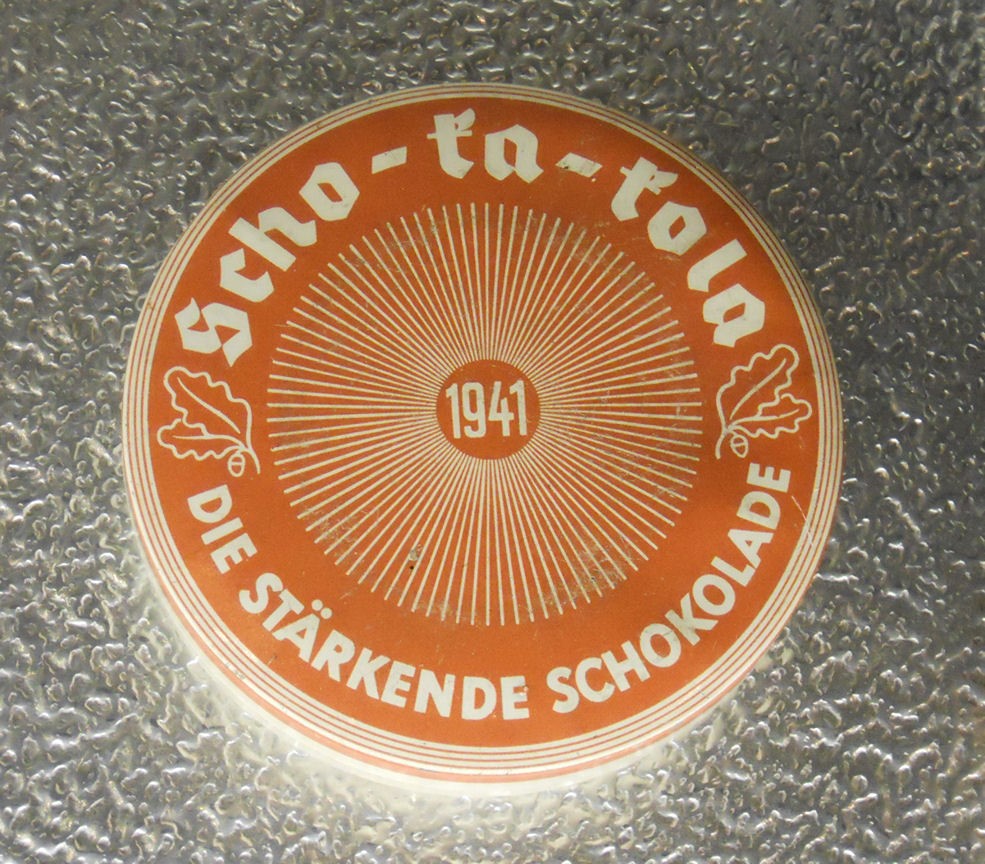
AN OLD AND NOW EXTREMELY EXPENSIVE TIN OF SCHO-KA-KOLA.
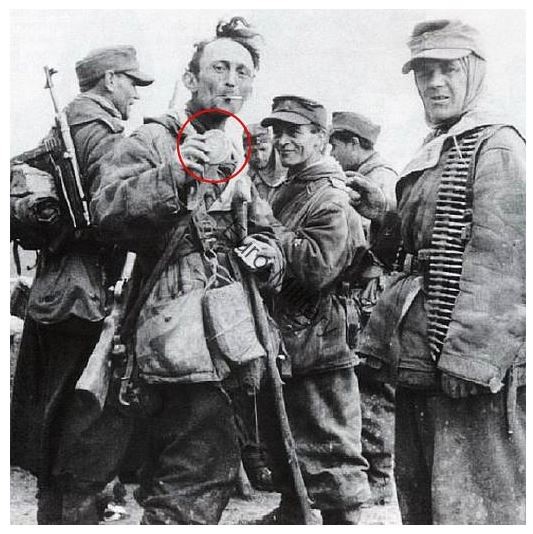
SCHO-KA-KOLA WAS HIGHLY VALUED BY GERMAN SOLDIERS IN WW2.
SCHO-KA-KOLA AFTER THE DISASTROUS SECOND WORLD WAR.
After the war and during the occupation, the Allies also distributed it among the starving German population. In 1969, German chocolate producer Hans Imhoff took over Hildebrand, and in 1972 he also bought the struggling Stollwerck chocolate manufacturer from Deutsche Bank. On 1 July 2005, German company Genuport acquired all brand and distribution rights to SCHO-KA-KOLA. Today, SCHO-KA-KOLA is made by a subsidiary in Berlin, is available throughout Germany and is distributed in a limited number of other countries. In the Netherlands, it is available at what I call the greenest outdoor shop in the country: Country Store in Epe.
THE SCHO-KA-KOLA TRADEMARK DISPUTE.
On Friday 1 May 1998, Waldbaur GmbH filed a United States federal trademark application for SCHO-KA-KOLA. The United States Patent and Trademark Office assigned the SCHO-KA-KOLA trademark serial number 75477887. The federal status of this application was abandoned on 18 October 2001 following a decisive agreement between the opposing parties. The powerful globalist Coca-Cola Company, which in my view wants to dictate everything, had filed the trademark dispute under proceeding number 91116244.
SCHO-KA-KOLA TODAY.
The unique chocolate recipe has never changed and contains a substantial dose of caffeine from natural sources such as cocoa, coffee and kola-nut powder. SCHO-KA-KOLA caffeinated chocolate gives you lasting energy, greater strength and better concentration, without the sometimes dubious additives found in today’s “stinking chemical” energy drinks.
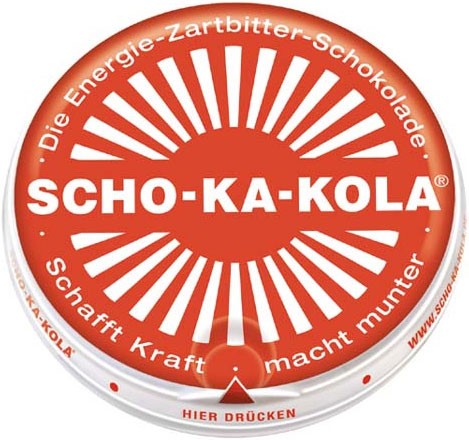
SCHO-KA-KOLA DARK CHOCOLATE (OLDER TIN).
THE INGREDIENTS OF SCHO-KA-KOLA: Cocoa mass (Zartbitter/red 58%; Vollmilch/blue 30%), sugar, cocoa butter, coffee (2,6%), whole milk powder, kola-nut powder (1,6%), lecithin (emulsifier), E476 (emulsifier), flavouring.
Note:
• SCHO-KA-KOLA may contain traces of hazelnuts, almonds, soya and gluten.
• The use of SCHO-KA-KOLA in children and pregnant women is not recommended.
• Consume it in moderation: two wedge-shaped pieces at a time are more than enough.
USING SCHO-KA-KOLA DARK CHOCOLATE (RED TIN).
* There are 16 pre-cut, wedge-shaped SCHO-KA-KOLA pieces in two layers in an attractive tin.
* Four pieces of SCHO-KA-KOLA caffeinated chocolate contain about as much caffeine as a cup of espresso, keeping you awake longer and giving you extra energy.
* Contents: 100 grams (16 wedges) in a retro tin.
* Flavour: dark chocolate.
Tip 1: the empty tin is ideal for a small survival kit.
Tip 2: A popular homemade snack in the German army is “Kalter Hund”: Melt 250 grams of SCHO-KA-KOLA in your mug, for example. Pour the melted chocolate onto two outdoor biscuits, then place two more biscuits on top to make a sandwich. Let it cool, then enjoy! SCHO-KA-KOLA is also available as milk chocolate in a blue tin.
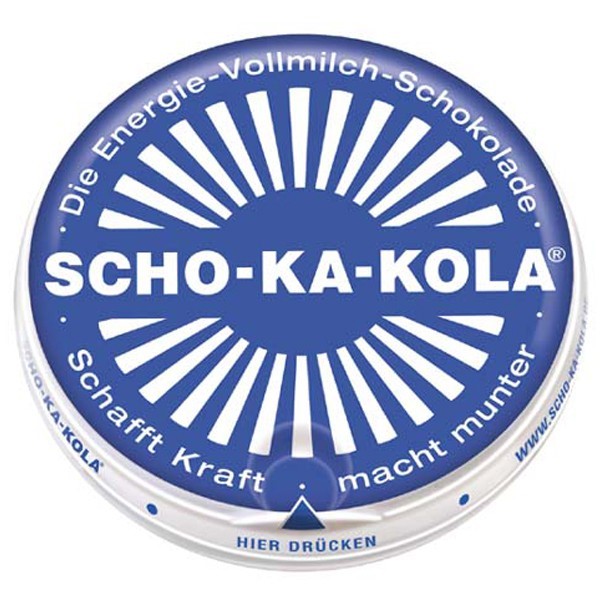
SCHO-KA-KOLA MILK CHOCOLATE (OLDER TIN).
MY OWN FINDINGS.
MY SUGGESTION TO THE GERMAN SCHO-KA-KOLA MANUFACTURER:
Please make a combined tin with both milk and dark chocolate wedges for a backpack or bag. That saves the weight of carrying two tins of SCHO-KA-KOLA, because a backpack is sometimes heavy enough already.
ACKNOWLEDGEMENTS: My thanks to the staff of what I call the Netherlands’ greenest shop and outdoor specialist, Country Store in Epe, for providing both varieties of CHO-KA-KOLA tins. Delicious!
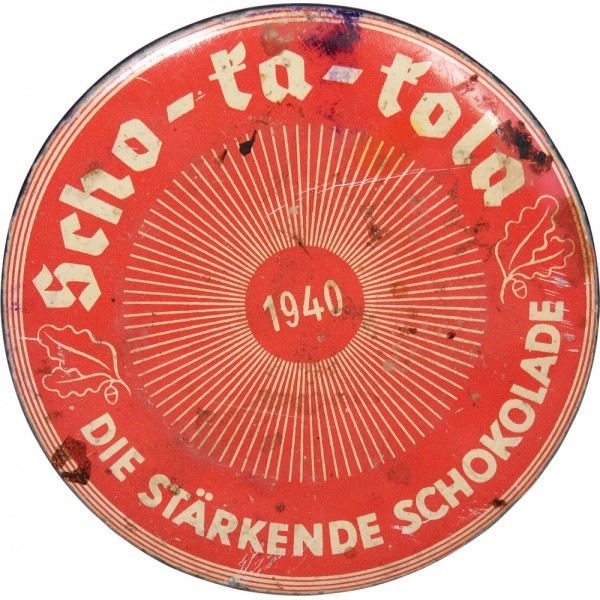
FOR DARK-CHOCOLATE ENTHUSIASTS: A VERY OLD GERMAN WW2 TIN OF SCHO-KA-KOLA DARK CHOCOLATE.
 Lees in het Nederlands
 15% off
 15% off