One calls it a tarp, the other a basha. What's the difference between those two? None.
Basha is the military name for a sheet fitted with eyelets and/or loops so it can be pitched in various ways as a shelter, tarpaulin or awning.
They are made from waterproof, usually, or water-repellent material. Their low weight makes them a good alternative to a tent in most areas. You can sleep comfortably and dry underneath when it rains. You could do that in a bivvy bag too, but then changing your clothes in the rain becomes a problem. A bivvy bag combined with a basha or tarp is therefore ideal.
Use cord to pitch the tarp or basha between trees or poles, for example over a hammock, or as a lean-to. It offers protection from sunshine and wind as well as rain.
Besides cord and/or bungees, you need tent pegs. Some bushcrafters carve these from sticks on site. It pays to think ahead: you would need some luck to find suitable sticks on a beach. Trekking poles or canoe paddles can serve as tent poles.

Bashas are usually made from PU-coated fabric and are generally olive green or printed with a camouflage pattern. The better versions are IRR, or infrared-reflective, to make detection with night-vision equipment more difficult.
Tarps are made from a multitude of fabrics. From super light nylon to cotton/polyester. The cotton/polyester version is fairly resistant to the sparks of a campfire.
Once home, give the basha or tarp plenty of opportunity to dry, just as you would a tent, to prevent mildew. Putting it in a washing machine is not a good idea. Avoid chemical cleaners too: use water and a soap solution instead. And do not tumble-dry it!
If you use a sail to keep your bivvybag or sleeping bag clean, make sure it does not stick out outside the tarp. Otherwise, water could be on it.
You can pitch the windward side of the tarp closer to the ground. The stronger the wind, the lower or flatter it should be to catch as little wind as possible. If you want to play cards with your friends in the evening, hang it higher if the weather permits. Always make sure rainwater can drain off instead of pooling on top. Much of it will drain from the lowest corner, so choose that corner’s position carefully. If you have ever seen water run along a sloping guyline, you will know what I mean. If necessary, dig a drainage channel around your sleeping mat and equipment, particularly on sloping ground.
Below are some photographs showing a tarp/basha:
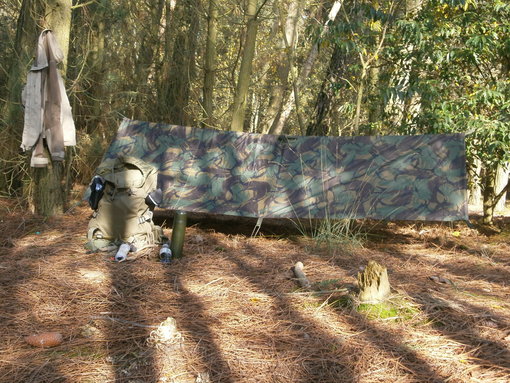
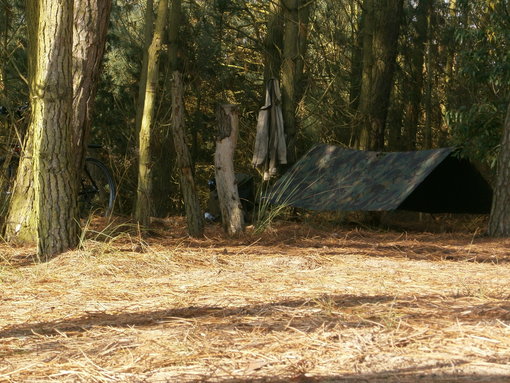
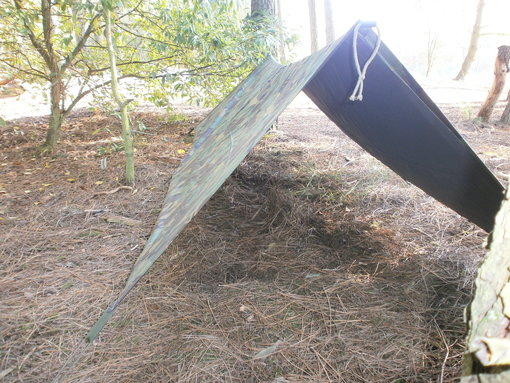
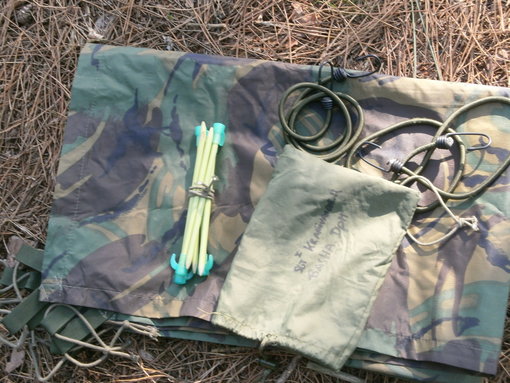
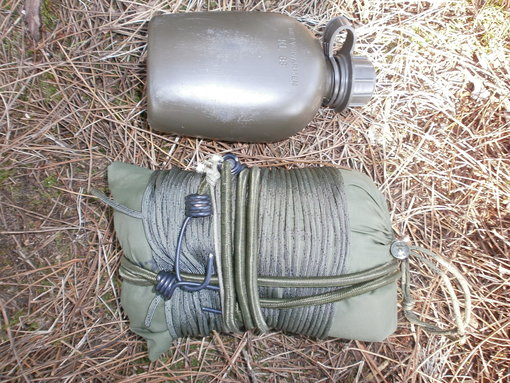
These photographs are examples of what a tarp looks like. Colours and dimensions can vary, and tarps and bashas come in many sizes and materials.
 Lees in het Nederlands


 15% off
 15% off